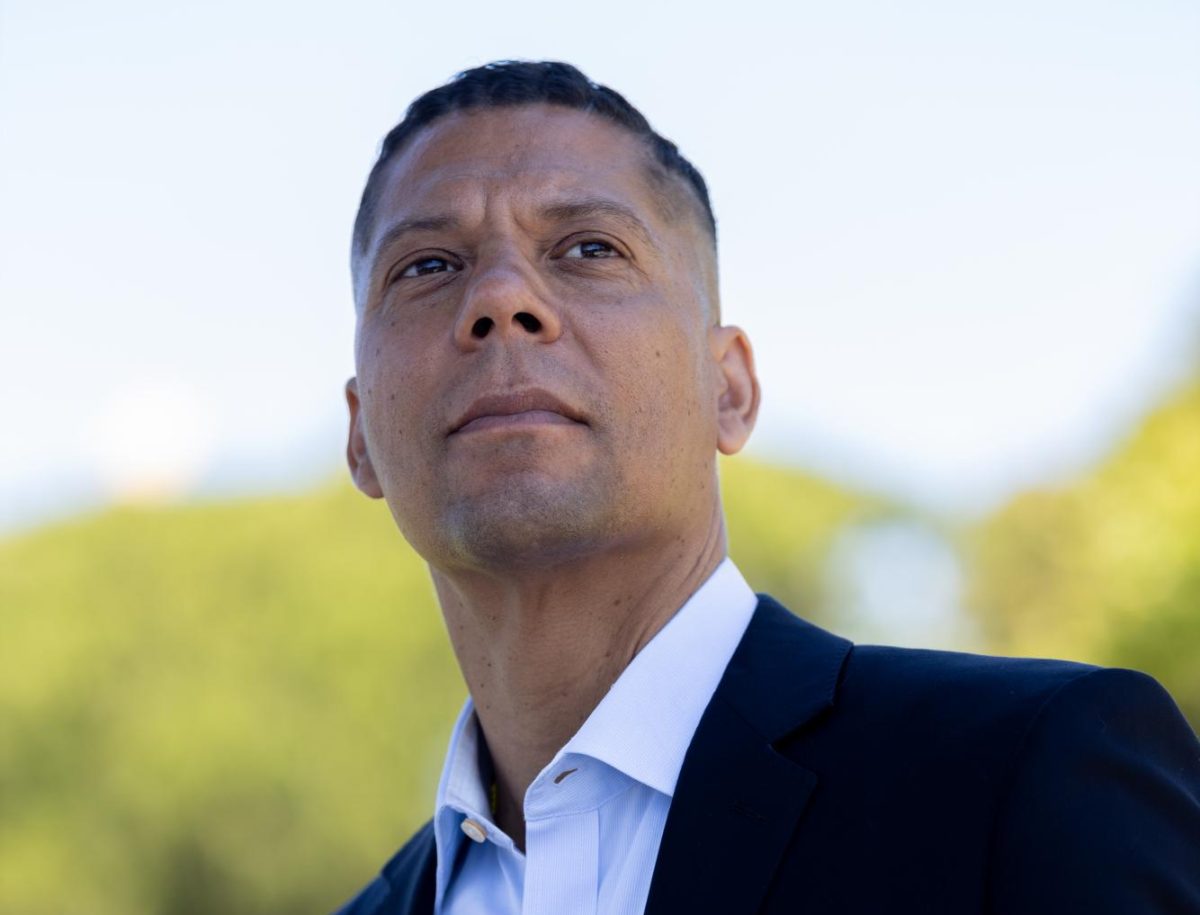
San Diego City College’s “Celebrating Immigrant Voices” event series opened with a keynote speech from Esmeralda Flores, the Mexico director of Coalition for Humane Immigrant Rights Los Angeles.
The presentation, held on Sept. 15 at the library, was attended by a small crowd of students and staff members. It was then followed by a Q&A.
Known as CHIRLA for short, the nonprofit describes itself as one of the largest and most effective advocates for immigrant rights, “organizing, educating and defending immigrants and refugees in the streets, in the courts and in the halls of power,” according to its website.
Why Flores visited City: The Undocumented Resource Center and World Cultures Program are highlighting immigrant experiences through diverse narratives, immigrant journeys, perspectives and experiences through the series, which includes a second panel on Oct. 28.
Flores was the first speaker, covering topics ranging from police violence and anti-immigration laws to human rights violations and deportations from the U.S.
“A lot of people are spending more time in detention, because detention is a business,” Flores said.
What CHIRLA is watching: Flores also touched on what CHIRLA does. This includes monitoring detention centers around Mexico, as well as transit points, airports and incoming deportation flights.
About the Customs and Border Patrol lawsuits: Flores talked about the CBP One app and the lawsuits related to it. Since the current Trump administration terminated its service without notice, it left everyone who signed up seeking asylum and those considering self-deporting in the dark.
Self-deportation is an unofficial term, and the idea of it is to let the government know you’re here and plan on leaving through the app as well, according to Flores.
“But we are not advising folks to do it just because we don’t have the certainty of legal ramifications of going through a program,” Flores said.
Supporting refugees: Human rights violations of refugees were one of the main topics in the presentation, as well as how non-Mexican immigrants are being deported to Mexico. This makes it harder for deportees to go back to their home country, she said.
Deportees get sent to the furthest city in Mexico, Tapachula, to make it harder for them to cross back over or survive without knowing the language, she added.
How California is responding: California passed a law in September that bans local and federal enforcement from wearing any sort of facial covering during operations.
“It’s really obvious who (the Trump administration is) targeting and who they don’t want here,” Flores said when asked about the recent Supreme Court ruling on racial profiling.
How can you learn more: The Undocumented Resource Center, alongside the World Cultures Program, set up a book display at the library. Students can check out works by and about Latine immigrants, as well as visiting their offices on campus.
The series will wrap with a National Immigrants Day Professional Panel on Oct. 28. Hosted in MS-162, the speakers expected include:
- Claudia Diaz Carrasco, Dean of IDEAAS
- Cesar Gumapas, Public Information Officer
- Lupita Lance, disAbility Support Programs & Services Counselor
- Dr. Edeama Onwuchekwa Jonah, Associate Professor & Equity and Engagement Librarian
Editor’s note: City Times Media has updated its style guide to standardize the use of the word Chicane and/or Latine when referring to people together who identify as a person from, or whose ancestors were from, a Latin American land or culture. The Associated Press Stylebook recommends using the word Chicano/Latino.