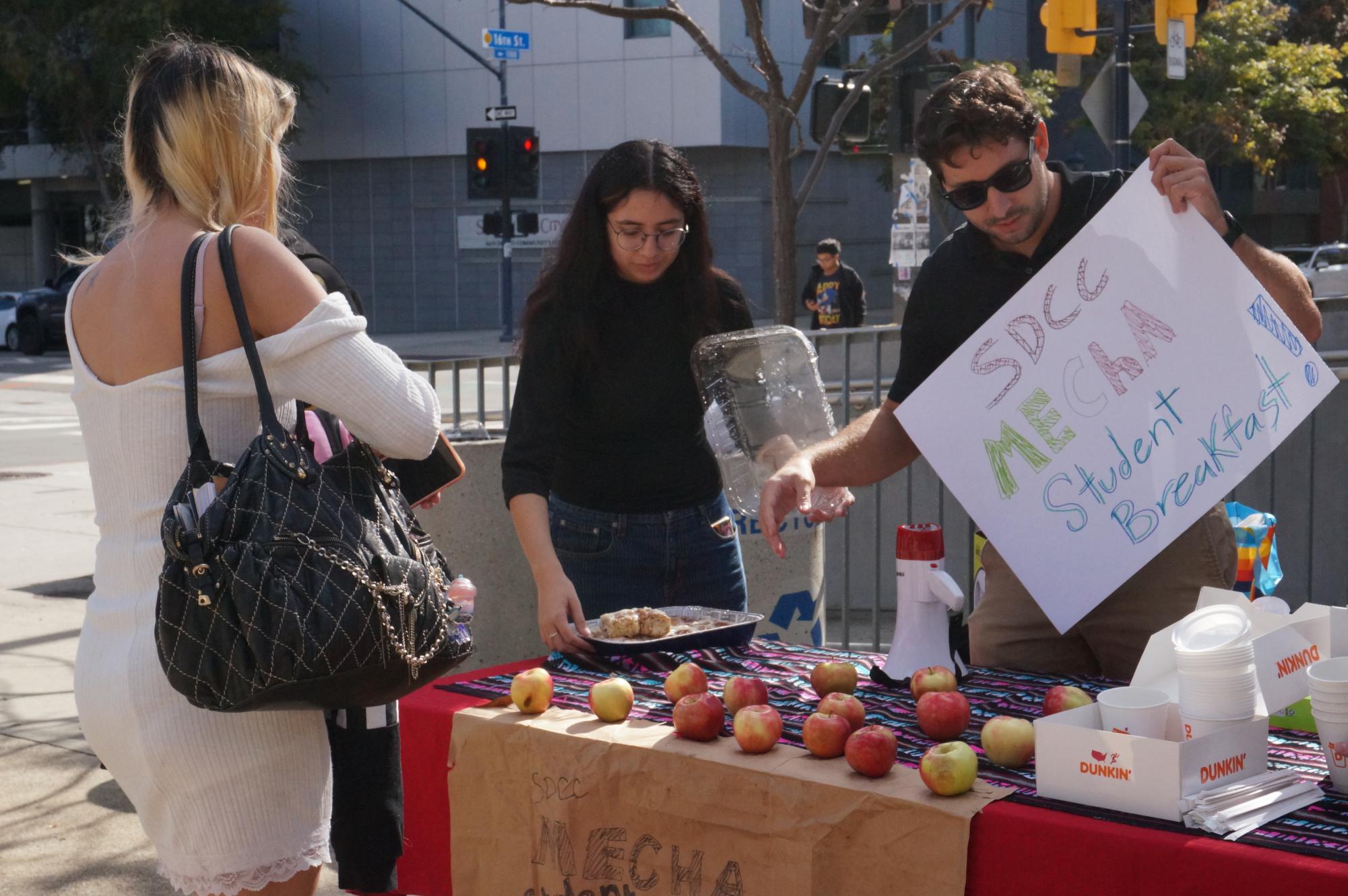
When walking toward San Diego City College’s AH building on the corner of C and 16th Street, a table sits scattered with foods like apples and cinnamon rolls.
Behind the table, M.E.Ch.A., Umoja, and Phi Theta Kappa members welcome students, staff and community members to grab a free snack while passing by.
“We’re not checking if they’re students here,” said Rosa Padilla, a M.E.Ch.A. club member, at the table Nov. 19. “We’re not checking how many classes they are taking. We’re not checking if they have any type of ID. This is just for the people.”
At the beginning of the year, City College made a shift within its student services at the Knights Table Food Pantry to a digital check-in.
Although cash is still an option at the cafeteria, it’s a process that involves using the Company Kitchen app, which requires students to enter cash into a machine in exchange for digital credits.
“Particularly everything here is with a card,” Padilla said. “You cannot pay with cash. Now, you need to have access to a cell phone or some type of technological device and internet.”
Padilla noticed international students within M.E.Ch.A. facing some issues that have been a result of the changes.
“When you pay with your card, sometimes the conversion rate will add an extra $3 to how much you already have to pay,” Padilla said.
To combat the change, the clubs planned the stand as an alternative for students who might have issues obtaining food on campus.
Joy Ellis, a human development major, enjoyed finding a place to grab a bite and socialize while heading to her next class.
“(This) brings people together, like I ran into my classmates being here, so we’re able to talk about our class,” Ellis said. “I think it unites us, and it’s always good to do it through food because, ‘what college student isn’t hungry between classes?’”
Padilla explained that all the food provided comes straight from the students at the booths rather than using club funds.
“(The Cycle Care club) brought coffee,” Padilla said. “PTK brought fruit, apples, and bananas, and then Umoja brought us cinnamon rolls.”
Although they do not plan to host any more in the fall semester, the clubs plan on coming together again next semester to host more food stands.
“Hopefully in the spring semester, we will be able to take this up bigger and better with more food, more student volunteers, and more often as well,” Padilla said.
This story was edited by Gabriel Vasquez and David J. Bohnet.