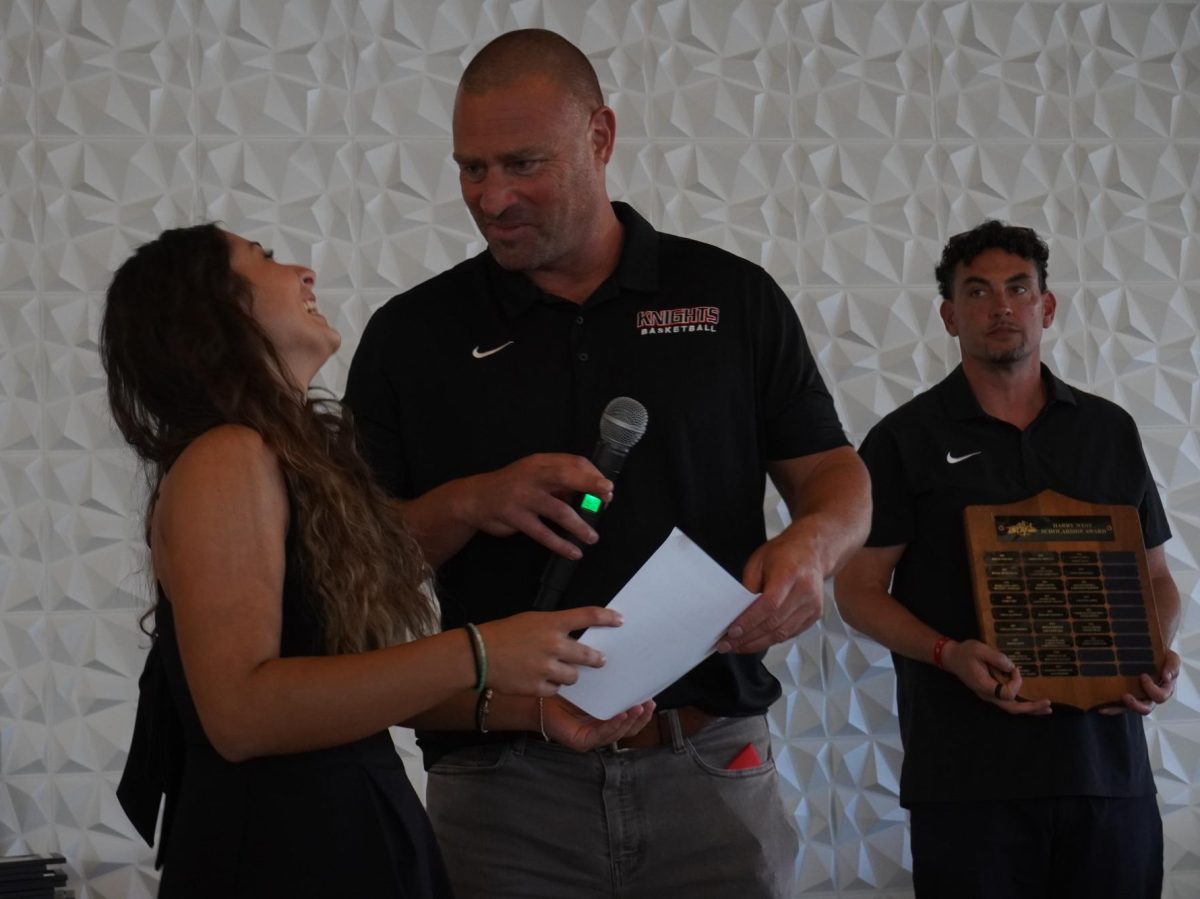
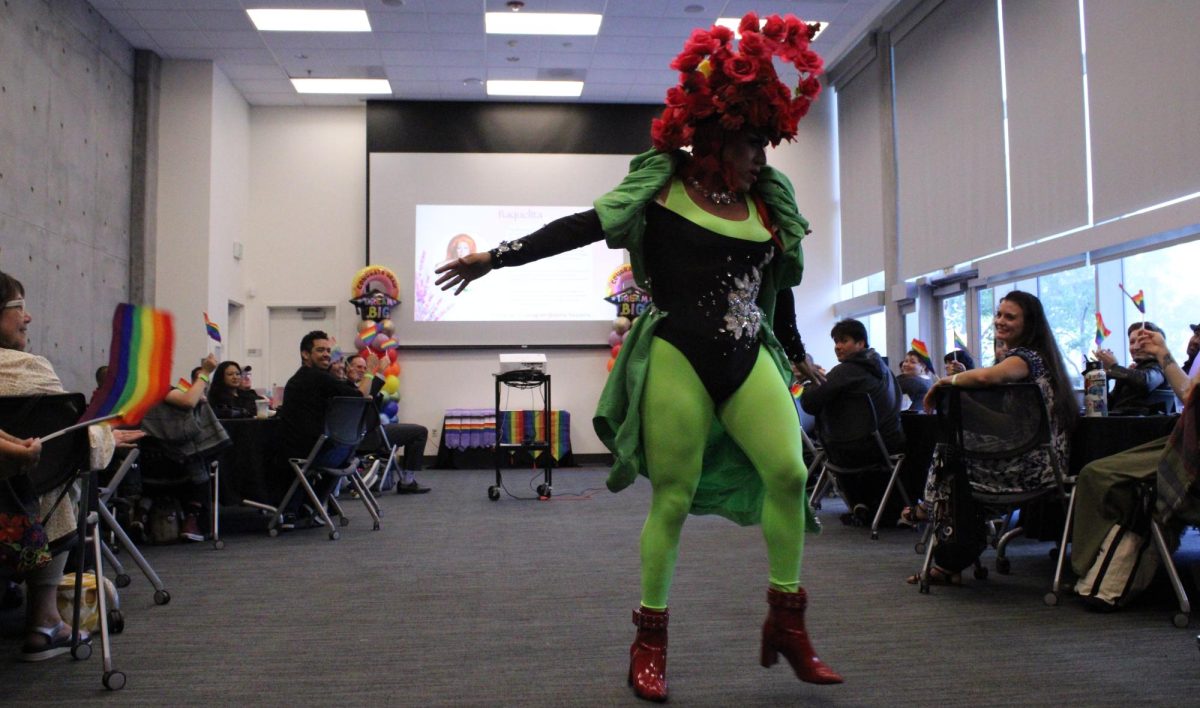
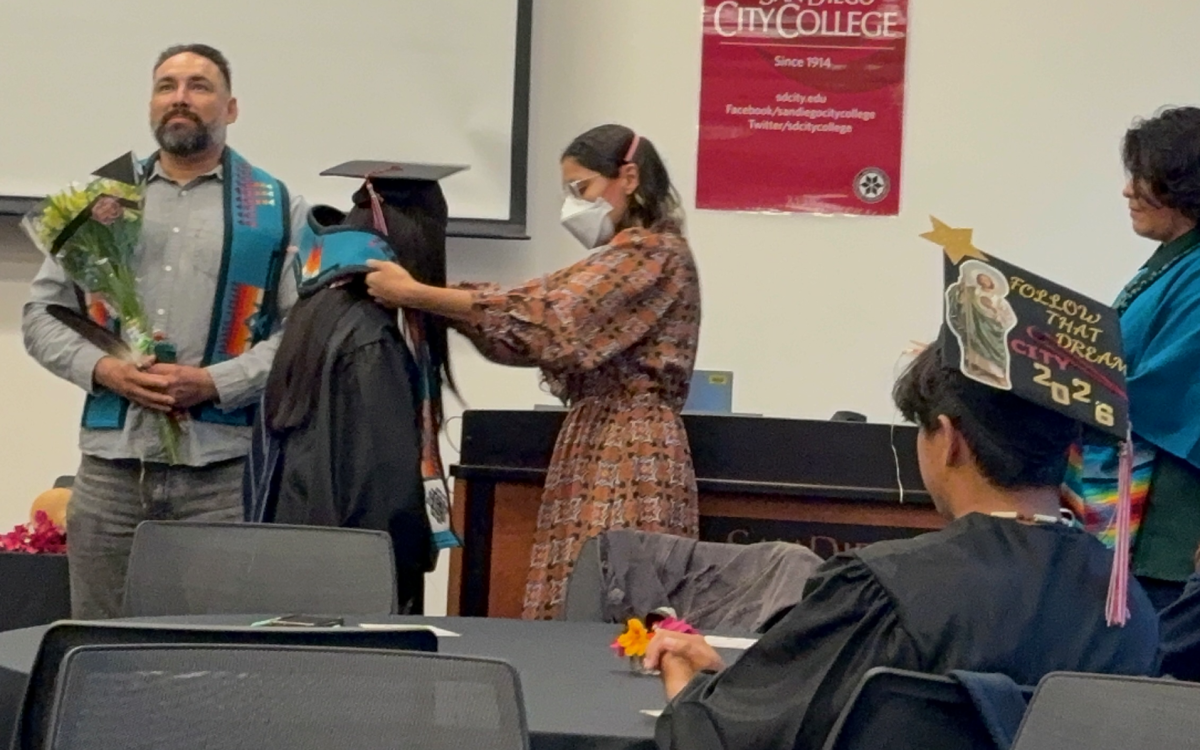
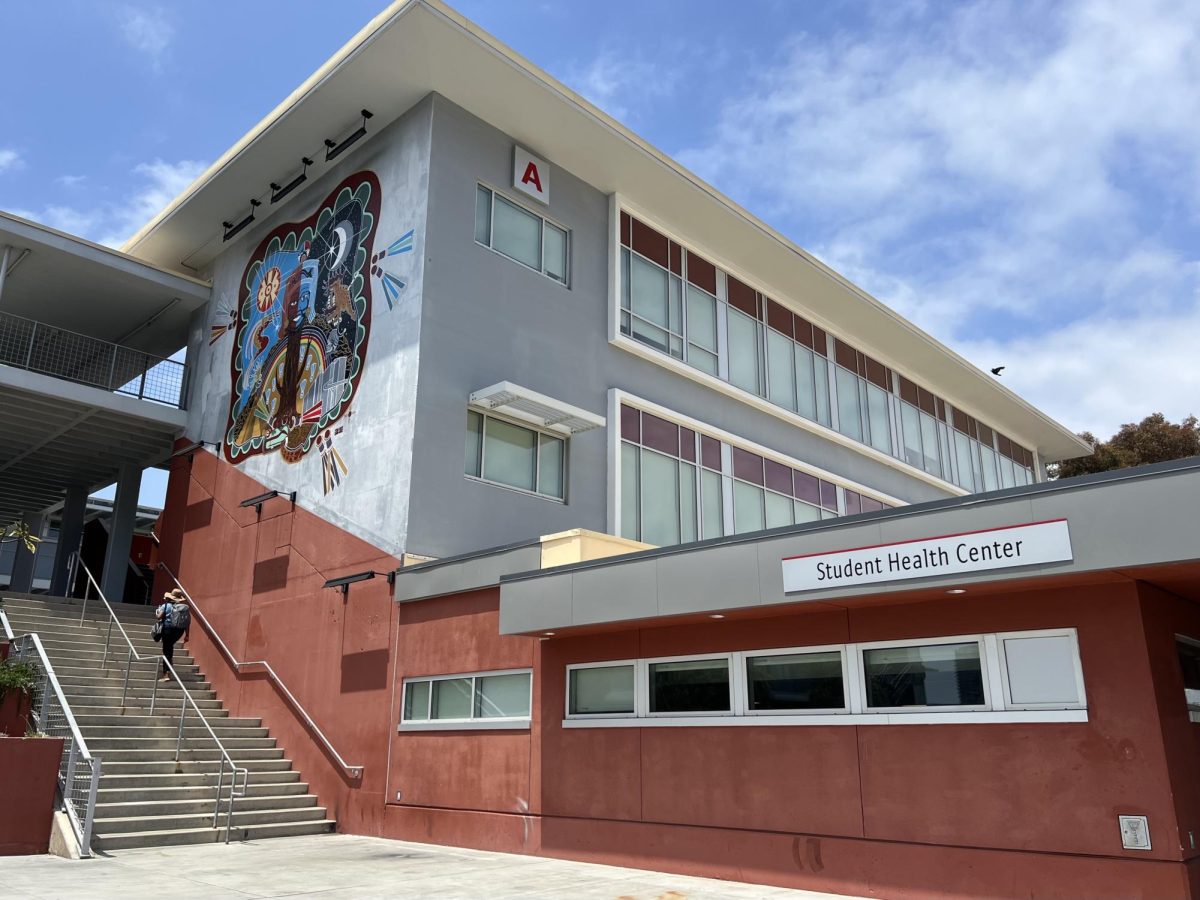
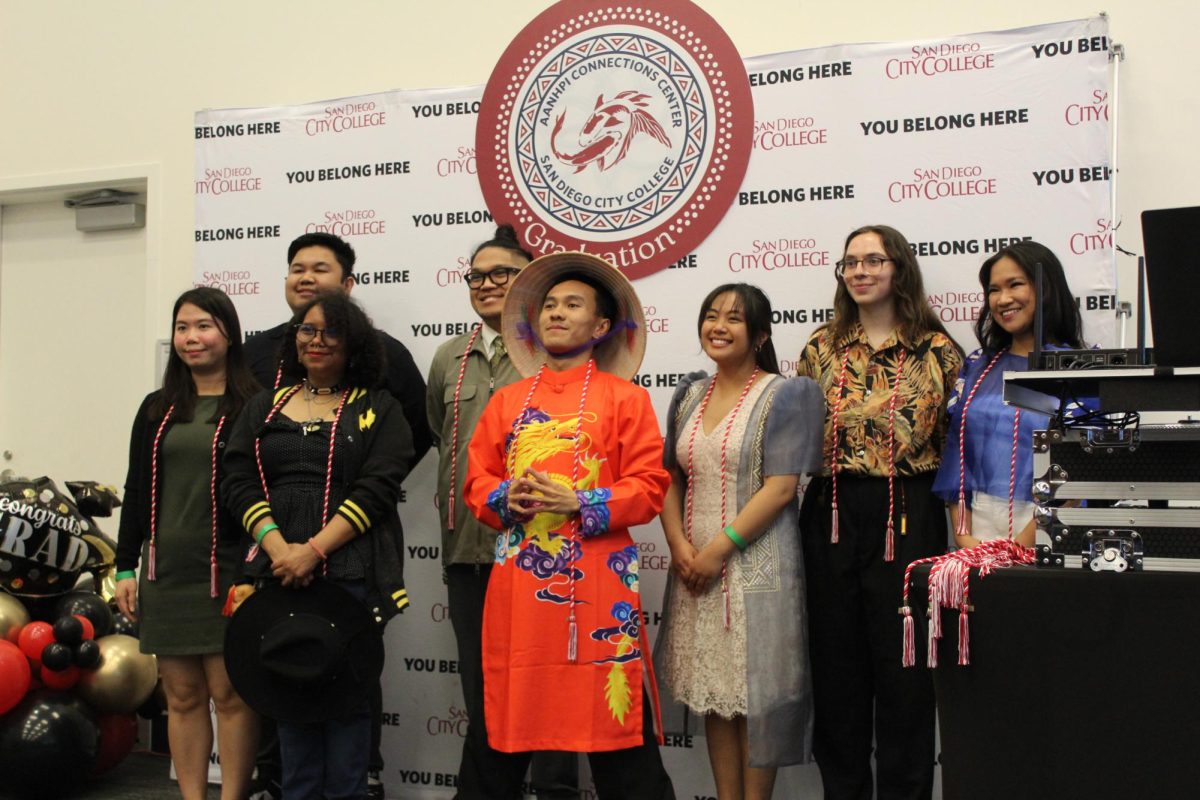
The 22nd annual student project and research symposium welcomed prospective students to San Diego City College, as part of the 12th annual community open house day on Thursday, April 16.
The event includes research poster presentations, spoken word and communication showcases that feature the various departments and services available at City.
Cooper Penwell, a senior from Canyon Hills High School in Terrasanta, is visiting City College for the first time.
“I hear about City all the time because of y’alls basketball team,” Penwell said. “Y’all are pretty good.”
The potential psychology or business student said he was also interested in becoming a barber and heard that City might have a program in the near future.
City Times Media is covering the story live and will share updates throughout the day.
Stay tuned for more live coverage.
LIVE UPDATES:
12:41 p.m., Tresean Osgood
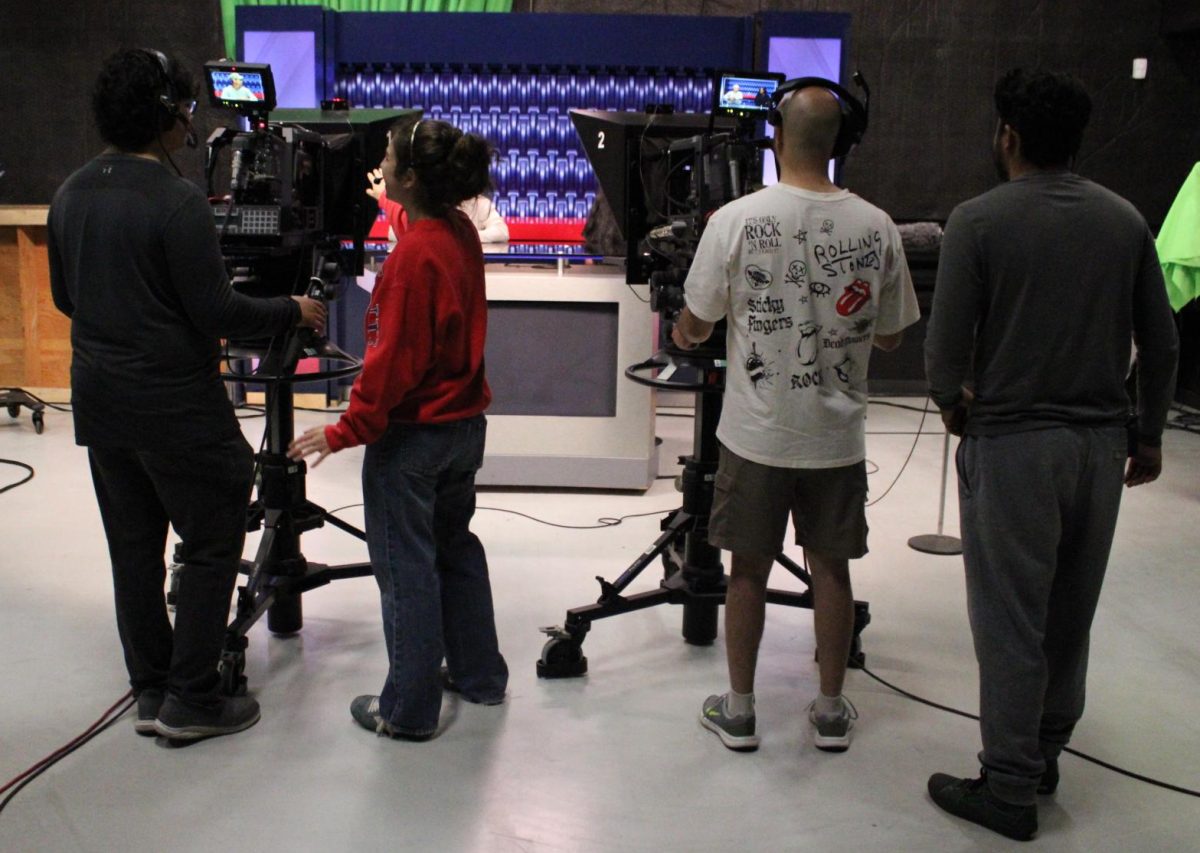
The Hope Show broadcast studio opened its doors to eager guests who have a passion for television and news.
Guests had the opportunity to become on-air talent or a part of the production crew and run through a mock show to see how television is made.
Film student Daniel Rubio assisted professor Chris Acedo in training visitors as they came into C-107 hoping to try out the state-of-the-art equipment.
“It’s really wholesome to see all these young faces and how everything fascinates them,” Rubio said when asked about the symposium. “It’s really nice to show what I’m interested in and see them reciprocate.”
Rubio also praised Professor Acedo for his personality and professionalism.
“He’s pretty cool, he’s kinda funny, he’s a pretty good communicator,” Rubio said. “He understands when to put the pressure on and when to take it back a notch. I appreciate his teaching.”
12:47 p.m., Rosemary Archer
Brin Balboa, a former community college student, values the importance of what City College offers – not only in fiscal assistance but also a place for students to go.
“It’s academic and financial support, but also it’s community,” Balboa said. “We want to make sure that students don’t feel lost and feel like they’re alone in this process, so this is what EOPS is kind of here for.”
EOPS was created in response to Senate Bill 164 after it created several barriers for marginalized communities to receive proper support.
The program houses resources such as Next Up, which offers various resources for students in the foster care system.
The Summer Readiness Program, also under EOPS, guides new students through the transition from high school to college.
12:58 p.m., Crow Ruiz
12 students from San Diego City College are performing their creative spoken at the AH and BT building quad.
The performance will go on for about an hour and each student will have a maximum of three minutes to present, and it will go on for about an hour with room for an open mic at the end.
The spoken word category allows students more creativity for their submissions.
Students participating in this category must have a mentor who assists and encourages them with their submission and throughout their performance.
Awards will be given to the top speakers based on the community and judge’s votes at 1:30 p.m.
The previous first place award winner in 2025, Victor B. Lang, will be performing once again at this year’s symposium with his different work, “A True Friend.”
1:19 p.m., Annie Garcia
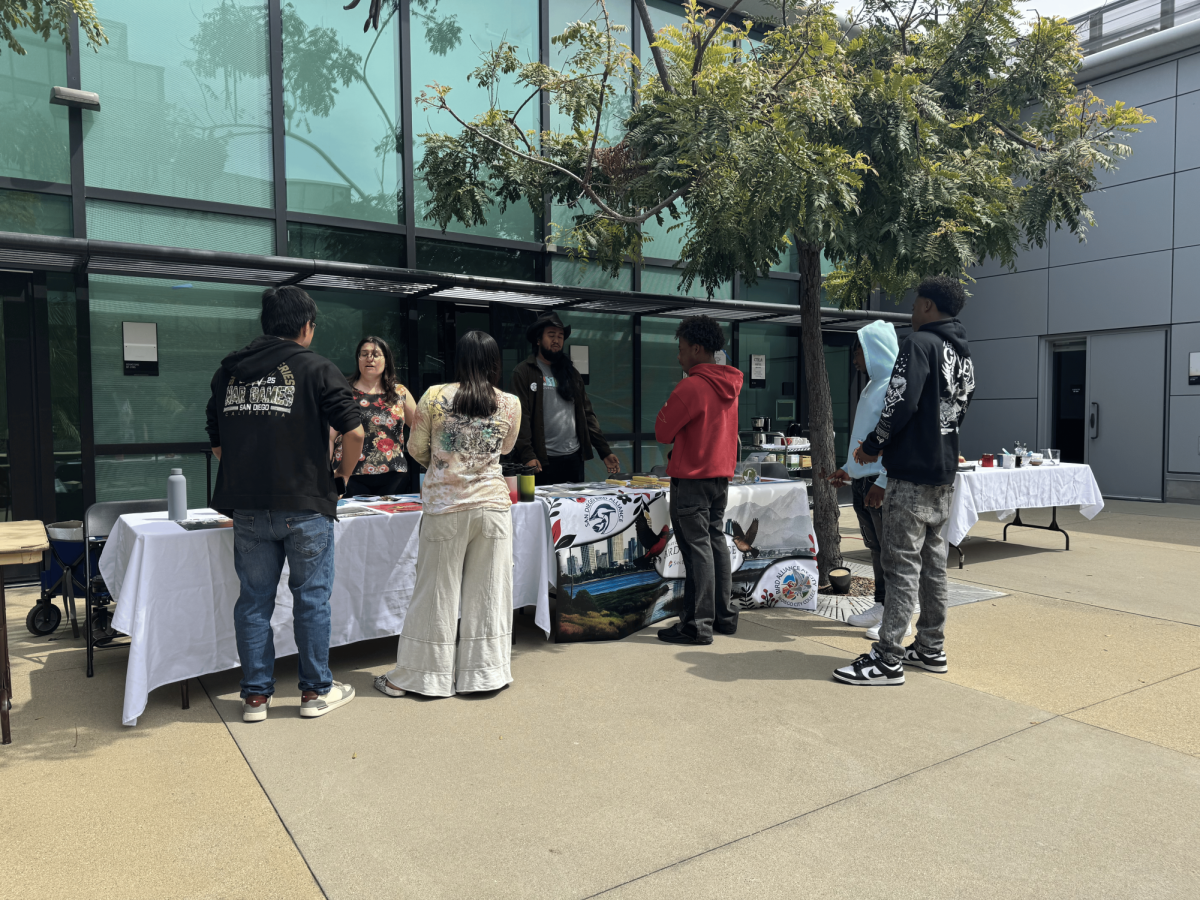
Cybersecurity major Jenette Lowry is a very involved student, participating in Inter Club Council and is the newest member of the bird club at City College.
She said being involved has helped her meet many people along the way and eventually find the bird club, which she is very passionate about.
“If you like being outside, if you like plants, or if you like birds, this club is a really fun excuse to meet really cool people,” Jennette said.
The bird club also gives away a shirt and water bottles to the students who complete the inscription to join their club.
The club meets every Thursday at 10 a.m. in the S Building.
1:39 p.m., Azriel Castaneda
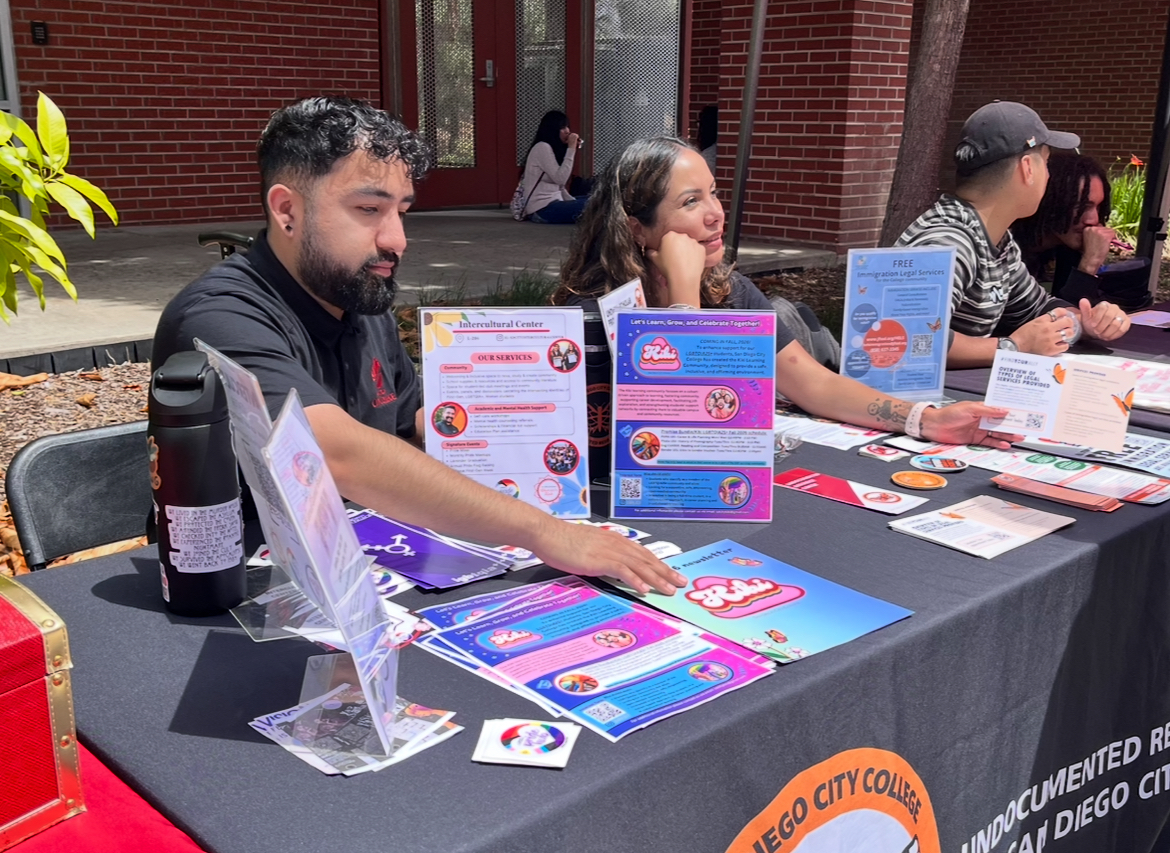
The Intercultural Center at City College was established in 2020 and houses the First-Gen Hub, Pride Hub and Womxn’s Hubs.
The center located within the L building aims to help students by giving them a safe space to be in, as well as offer academic help and opportunities to them.
Nathen Ortiz, the intercultural center coordinator, explained the importance for the prospective students to feel welcome and understand the opportunities from the center.
“We’re really just encouraging them to understand that there are so many opportunities,” Ortiz said. “There’s also a community here waiting with open arms to just welcome them.”
1:47 p.m., Marisol Sandoval
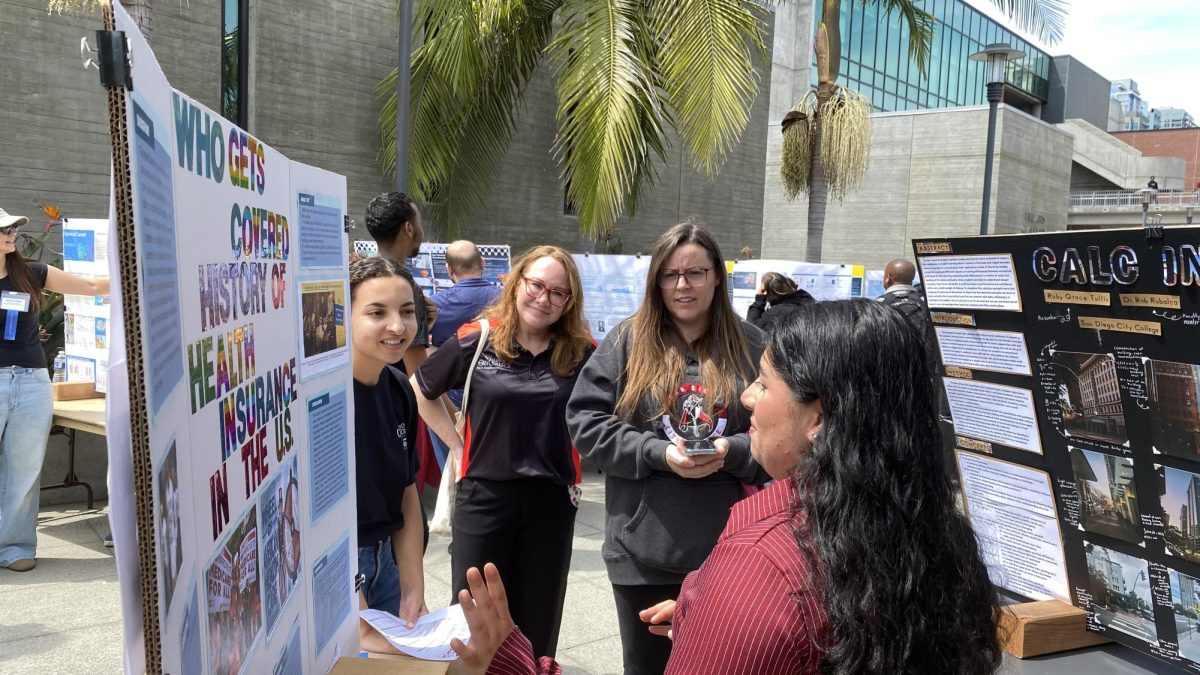
Damaryz Chavez, a political science major and future lawyer, stood holding her presentation against the windy San Diego weather. The rainbow lettering shined and captured the attention of professors and healthcare professionals.
Chavez’s presentation took an angle on healthcare many have questioned but never implemented. The students main objective was to figure out why the american healthcare system was faulty and how by researching healthcare history.
Chavez explained how healthcare was dealt with first hand on an institutional level and how it seemed like a great solution.
“Labor unions fought for wages and for private insurance.” Chavez said. “The president and congress decided to pass legislation so that employers can get tax free contributions to your health insurance. Everyone was happy.”
Chavez metaphorically lifts the rug and talks about the nuances that are left out of the history books.
“This all seemed great, but it’s not as great as it seems, because not everyone was working, not everyone could work, and not everyone was making the same amount of money,” Chavez added.
Chavez concluded her presentation by pushing the audience forward.
“The U.S. as a fully developed nation should follow countries like Mexico, Canada and our neighbors across the oceans who are doing it,” said Chavez. “I don’t see why the U.S. can’t follow suit. But of course, capitalism and greed come into play, and it makes it a little more difficult. In another world, we could have had a national or universal healthcare system.”
1:55 p.m., Marisol Sandoval
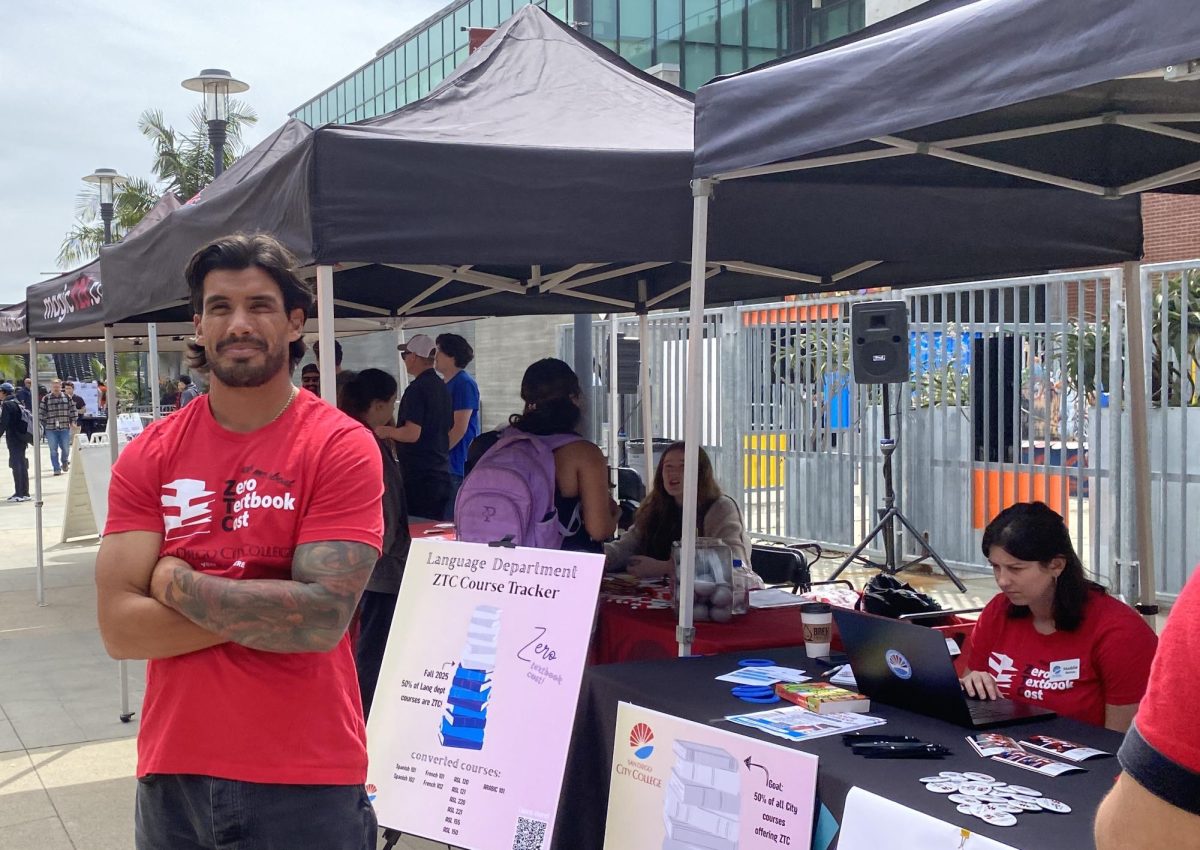
Zero Textbook Cost is a program that aims to lower textbook costs for City students. Including workbooks, lab manuals, readers, and required course software like online homework systems.
“We have the students who are trying to save money, faculty that we’re trying to recruit,” Dominick Grimm, a representative of Zero Textbook Cost, said. “Our goal is to reach at least half of the courses on campus.”
Under California law, SB 1359, community colleges must identify ZTC course sections in the class schedule.
“We want students to know that they can filter their course search by zero textbook cost courses and low textbook cost,” said Maddie Button, instructional design coordinator, referencing the $30 filter on textbooks through the Zero Textbook Cost program.
This program and information offers help to students when it comes to considering what courses or career pathways best fit their situation.