11th Annual Festival of New Plays highlights creativity through student-written, directed plays


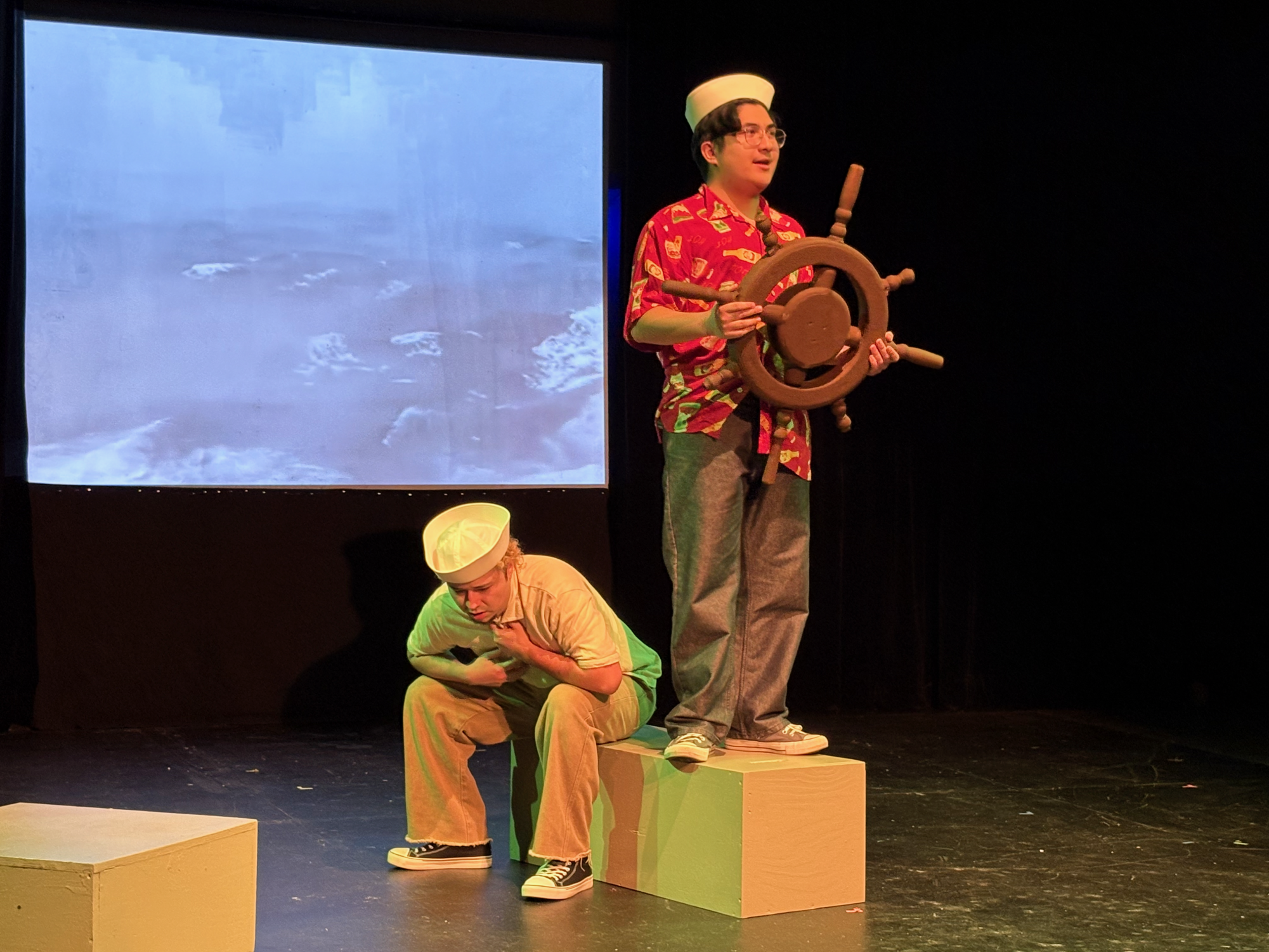

“Shipwreck” blends together the journey of two potential lovers with the journey of two sailors.
Written by Noah Baca and directed by Gil Magaña, the two stories are combined through the use of metaphors.
Kev, played by Ty Menor, and Matt, played by Quipachtli Martinez, are the two leads who explore what a relationship with each other means.
“It’s a coming-of-age story (about) two people who get into (a) relationship, not an official one, but one that feels like one,” said Teri Monte, a theater stage worker who also plays the character Ben. “And as they progress into it, one of them starts to freak out a little bit and realizes what the implications of it would be for labelling who he is.”
Where Kev is more confident and comfortable in his identity, shown through the use of endearments and his authenticity, Matt is unsure of himself and hides away in a desperate bid for normalcy.
“I feel like, especially the way Noah Baca had written the play, it feels so realistic because (of) the way that the characters are written,” Martinez said. “You know that there’s this air of hesitancy and this air of uncertainty regarding the entire situation.”
Although “Shipwreck” had its comedic moments, Magaña said he really appreciated the emotions like yearning and melancholy that were brought out by the actors.
“(The sailor metaphor) brings a level of depth to this play,” Martinez said. “It brings a level of depth to it that you just don’t see in plays, just in general. … The sailor scenes open up what people can take from the story.”
The audience was responsive throughout the production, laughing at funny lines, staying mournfully silent when characters faced hardships and gasping at surprising decisions.
Martinez was glad that the audience had enjoyed the production, as it had allegedly been silent for their rehearsals. Other rehearsals were filled with audible reactions.
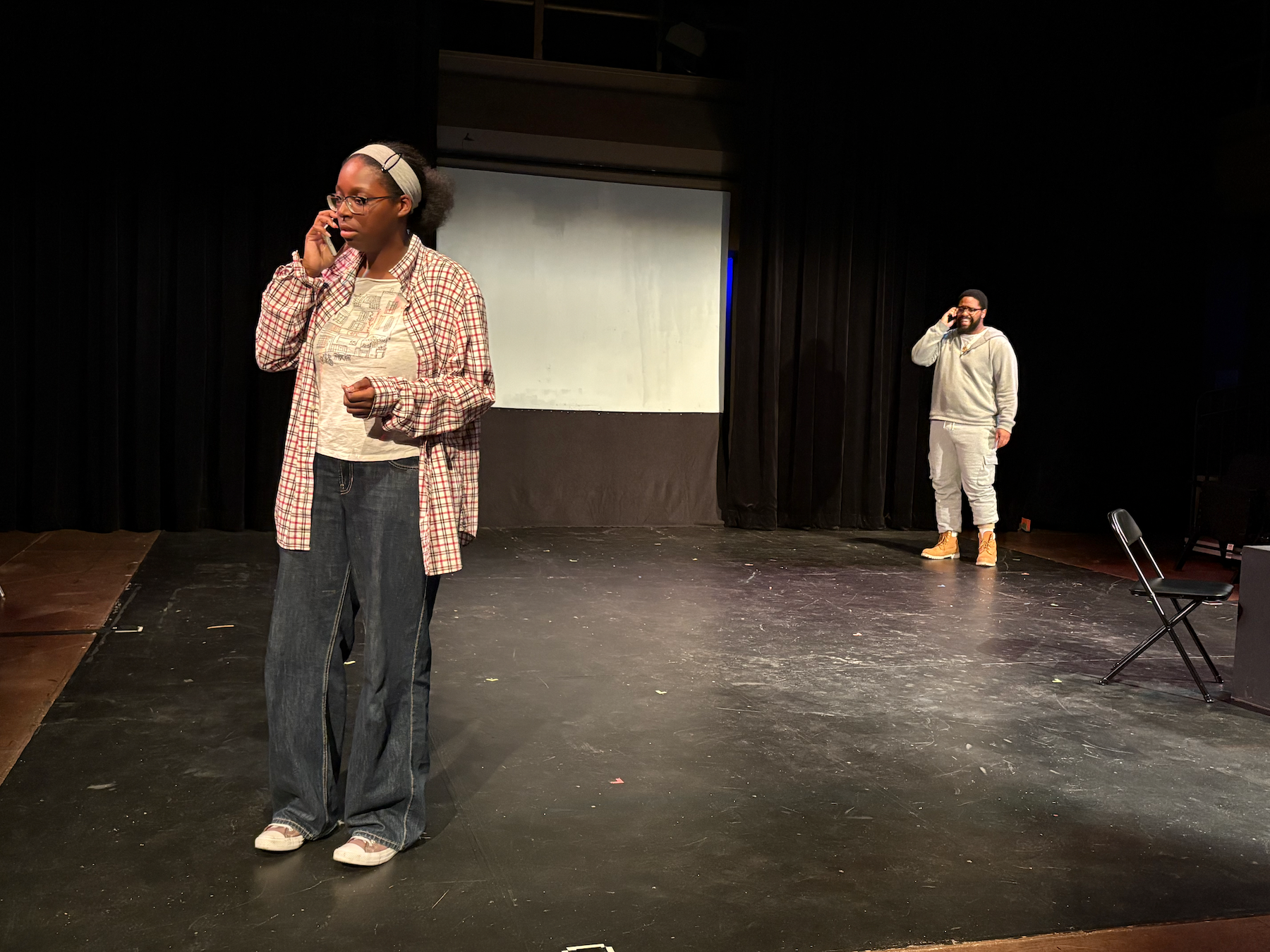
“The Night You Left,” written by Tonja Daniels and directed by Jesús Sandoval, explores the theme of police brutality and its effects on the Black community.
The story follows T, played by 19-year-old theater major Janessa Brown, who remembers the day her nephew, the boy she helped raise, was killed by the police.
“A lot of it (is what) I’ve seen and I’ve experienced and that I’ve had my family tell me that they’ve witnessed and experienced,” Brown said.
Brown hopes the play will inspire people to do research on and advocate against police brutality.
According to the Mapping Police Violence project, a non-governmental dataset produced by an independent research collaborative, police have killed 237 people in the U.S. from the start of 2026, an average of over two deaths per day.
Brown said that, even with just 10 minutes, the play was effective in illustrating the impact of this violence.
“I do think, especially with the time constrictions, that what the playwright was able to put in (the production) sums up the brunt of it,” Brown said. “Obviously, the whole of it is not in there, but the most effective part … was able to fit in there.”
Diavian Irby, a visual and performing arts major who plays a cousin named Rick, recounted the reactions he got from friends and family who watched the production.
Rick is crying when he calls T in a shaking voice to let her know her nephew, his cousin, has been shot.
“My friend would come up to me, and he’d be like, ‘Yo, you did so good. I seen the tears, and it almost made me cry,’” Irby said.
Kate Neff Stone and Katie Rodda, the professors in charge of the festivals, attempt to highlight a specific issue each year during the Annual Festival of New Plays, according to Brown.
Police brutality is a heavy topic to handle, but Brown believed Daniels, the play’s writer, did an amazing job with the script.
“My brother’s a big advocate for African American rights,” Brown said. “He was like, ‘This is what people need to see.’”
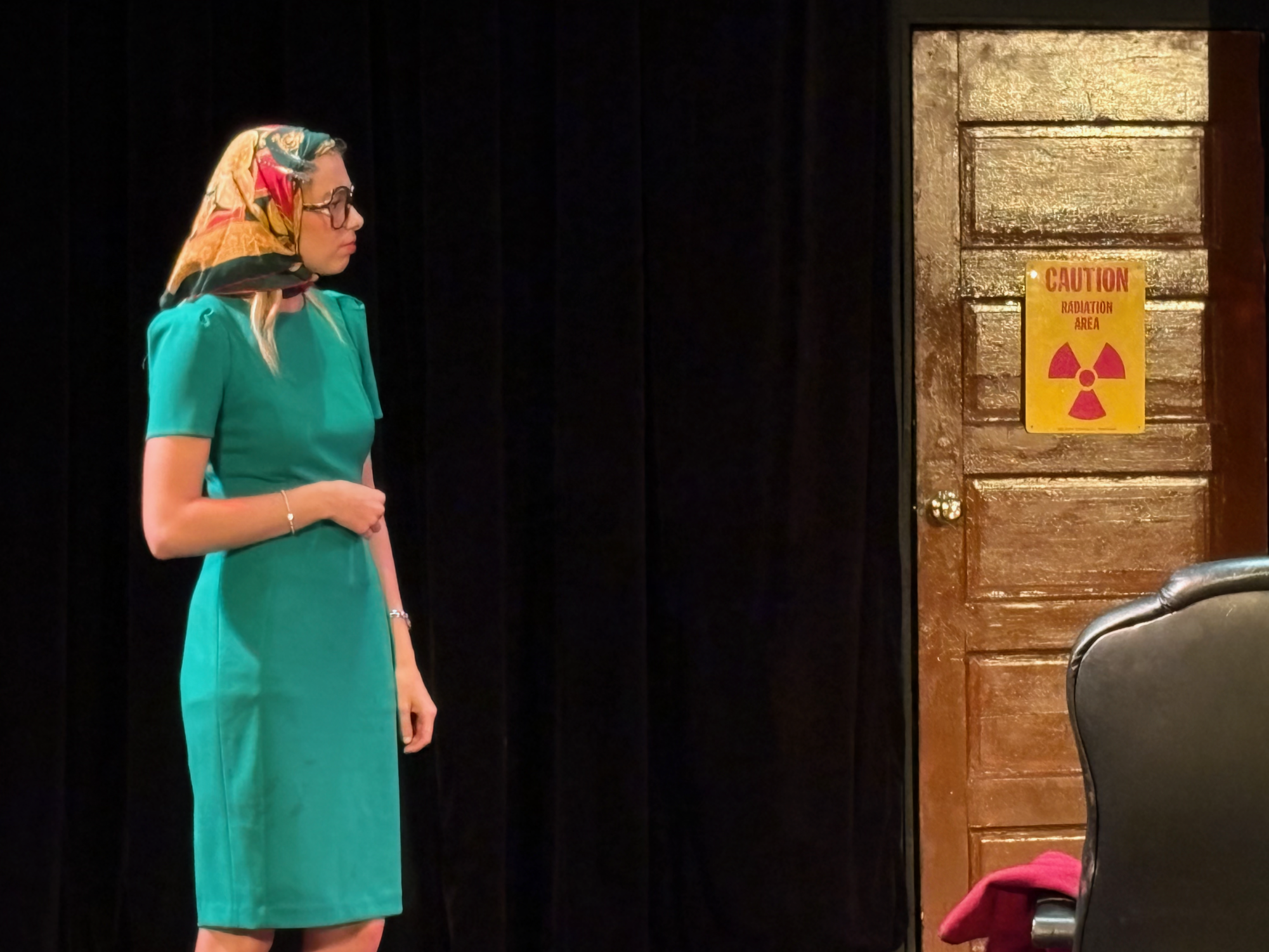
The final play of the festival, “The Calm Expression of Not Being There” written by Gil Magaña and directed by Ben Kermanian, unsettled audience members with its rapid devolvement into a terrifying situation.
Meghan, played by Annaleece Wakefield, finds herself in a seemingly innocent circumstance with Dottie, played by Lily Wrieden, a communications major with a passion for theater.
The play starts off as a normal scenario, one that happens all the time in everyday life – picking up something from someone selling goods online.
Things twist into something sinister when Meghan finds herself trapped with Dottie.
“It was a nightmare scenario that I envisioned,” said Magaña, a design student and playwright. “What if I … recorded somebody behaving badly, and it blew up in my face sometime later. Like imagining the worst case scenario.”
Horror is a rarely explored genre in the theater world, Magaña said.
There are some notable theaters catering to the horror genre, though, some even Magaña was inspired by, such as the Grand Guignol Theater in Paris.
“I feel like it’s very different than the other plays that are in the show,” Wrieden said. “It’s funny to hear each night, the audience gasp when it starts to get serious because that was my reaction, too.”
“The Calm Expression of Not Being There” provides interesting commentary on safety, justice and morality, especially in this current digital age.
Wrieden empathized with the horrors of both sides of the situation, although they do admit that Dottie was in the wrong.
“(The play) is a very real situation, and it’s very grounded in reality,” Wreiden said. “The themes in the show and the things that these people are going through, like the surveillance and the fear, I think it’s something we’re all living with nowadays, and it is universal.”
The play received praise from many people, both for the writing and the acting.
“I was thrilled to see how it came to life and how the actors really were embodying the ideas of it,” Magaña said, “and just the enthusiasm that they brought into those roles.”
Your donation will support the student journalists of San Diego City College. Your contribution will allow us to purchase equipment, cover the cost of training and travel to conferences, and fund student scholarships. Credit card donations are not tax deductible. Instead, those donations must be made by check. Please contact adviser Nicole Vargas for more information at [email protected].