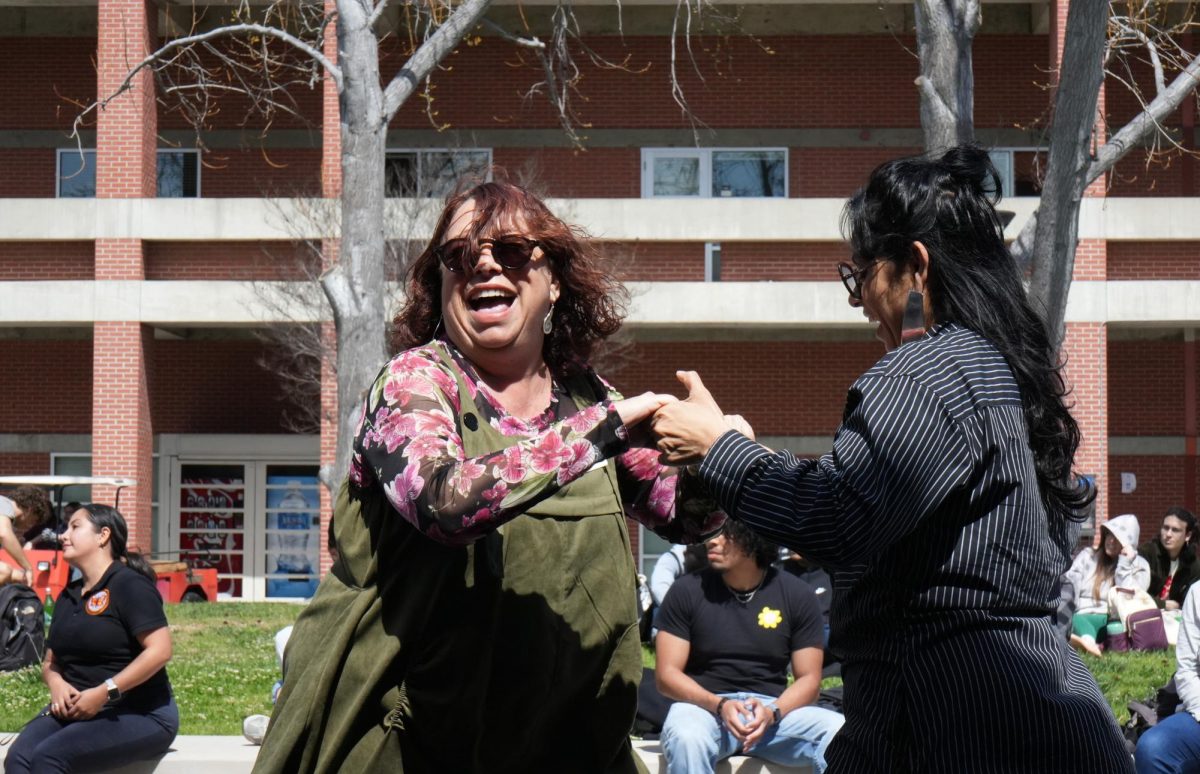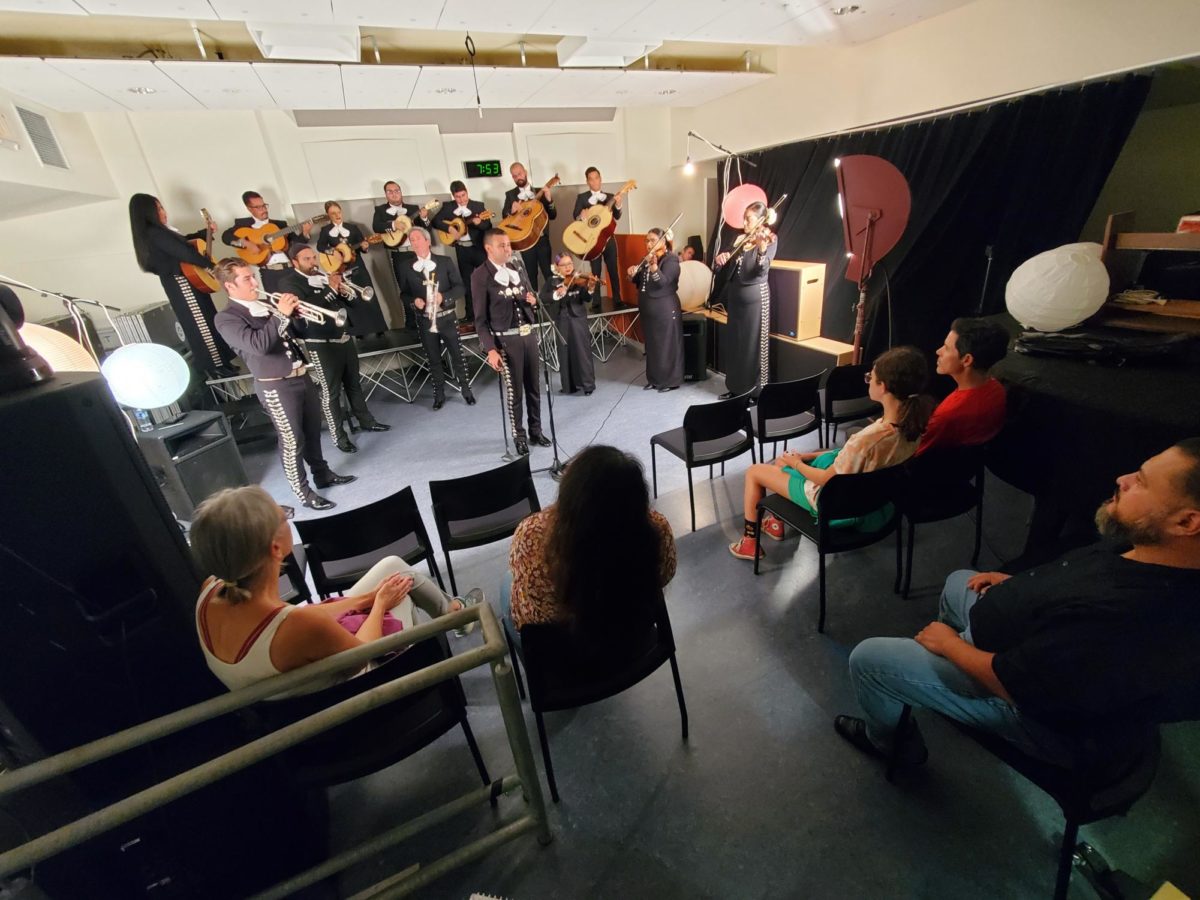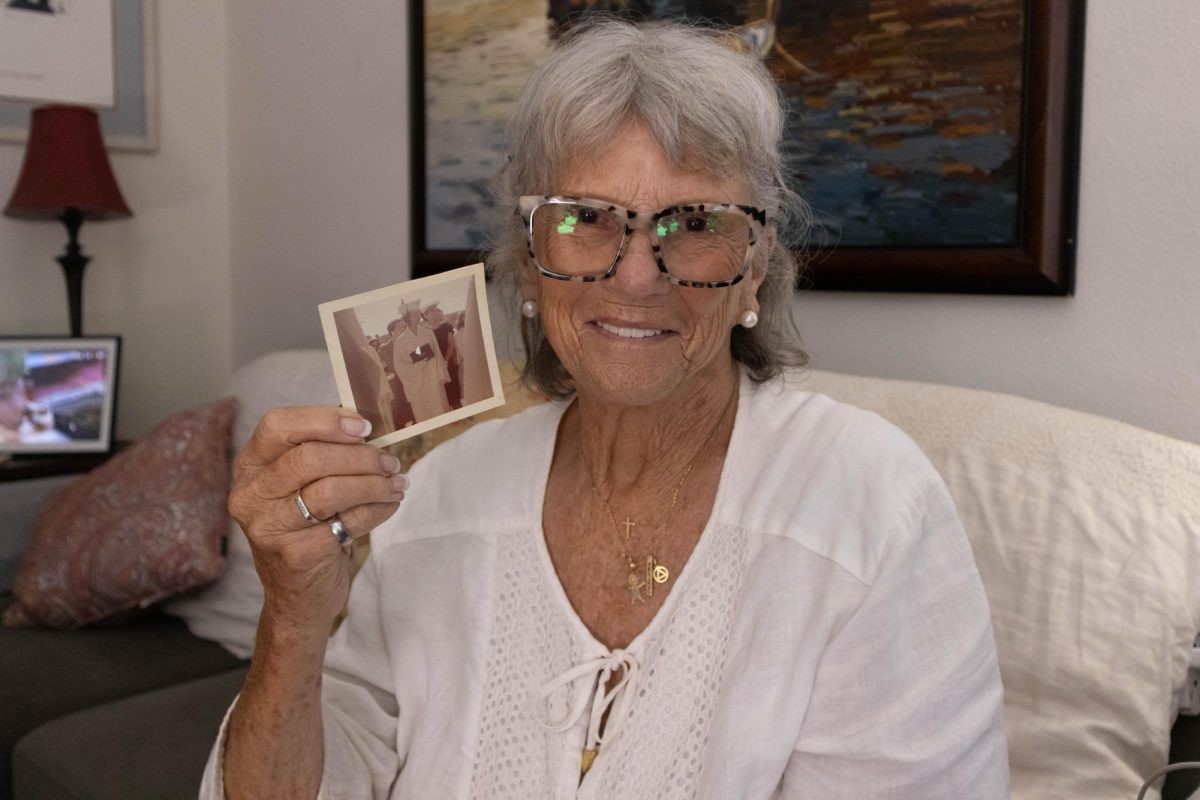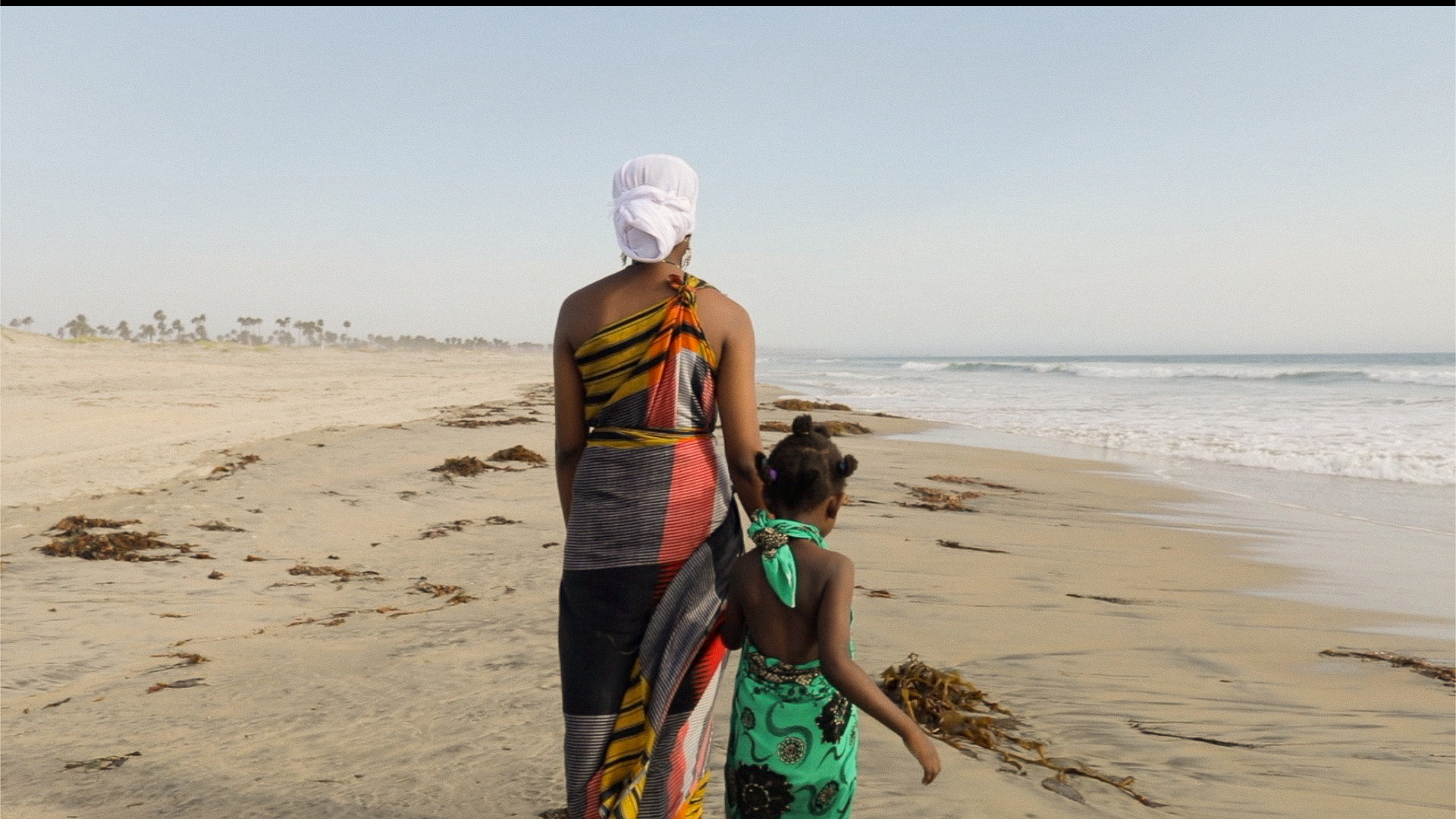
San Diego City College hosted the first film screening of “Mujer Mariposa: Voices Of Womxn On The Periphery,” showing the intricacies of migrant womxn and their families, on April 26, 2026.
Mujer Mariposa, translating to “butterfly woman,” highlights the unseen stories of refugee womxn navigating the complexities and barriers of moving to the U.S. by showing the dynamic stories of three first-generation womxn from Eritrea, El Salvador and the Philippines.
It took a 7-year effort to create “Mujer Mariposa,” filmmakers Diana Cervera and Magdalena Ramirez said.
“Giving representation and recognition to stories surrounding migration and refugees allows individuals to gain a perspective that would otherwise be unheard,” Cervera said. “We wanted to use this film for conversation and dialogue, and how important the relationship between diasporas is.”
Cervera and Ramirez, two transborder Chicana artists rooted in San Diego, launched this project surrounding poetry about motherhood and migration.
The film even begins with spoken-word poetry written by Cervera through the lens of motherhood.
“I can hear her calling…,” a voice says over the visual of rolling ocean waves, “calling my name across time and sea, she sings to me in our native tongue, soothing my worries and fears, sometimes she visits my dreams.”
But when mothers began telling their stories, it expanded to what it is now.
Among the womxn profiled was Leslie, an educator and UCSD alumna whose work is centered in social justice.
“The 2018 Central American Caravan was a crucial moment in American politics,” she explained.
The caravan is considered one of the most dangerous migration paths in the world. Central Americans traveled for an opportunity for a better life in the U.S. through Tijuana.
In a tweet, President Donald Trump called the travelers requesting asylum an “invasion.”
Originally from El Salvador, Leslie found a new sense of understanding of how U.S. intervention and American colonialism created barriers to success for people in other countries.
“My mom has this internalized fear of living in the U.S. because of her inability to speak English,” Leslie said. “My father was upset about me getting political, but I realized it was due to their trauma from getting political in El Salvador.”
San Diego-born Fnann was another womxn featured, an alumna of SDSU and UCSD’s Ethnic Studies program whose work and passion is grounded in social justice and educational equity.
Fnann spent most of her life in San Diego, but wanted to learn more about her Eritrean-American roots, inspiring which a trip to Eritrea with her mother and family.
“(We) lived 2.5 hours from the capital and typically people would walk the rocky hills, but for us, we drove,” Fnann said.
Fnann understood the symbolism that could be found within the hills of San Diego, realizing why her mother sometimes gazed at the hills in such admiration, a sense of unlayering.
“I think I found myself, I found a peace, an internal piece of who I am, where all parts of me are valid,” Fnann said after she returned to San Diego.
The final womxn introduced in the film was Rizzhel, a San Diego based artist using photography and object-making to explore identity, culture, family migration and home.
The intersectionality of culture was exposed more with Rizzhel, as she learned more about her Filipino culture from her “lola,” or her grandmother.
“Up until this year, I didn’t consider myself Filipino,” she said.
Using outlets like embroidery and sewing to think about what her lola told her, she made handmade pillows sewn from the bedsheets in her grandmother’s home to sell in the city of Pasay, Philippines.
According to Rizzhel, she intended to make something about them “so that my worlds aren’t totally separate.”
“Because of her I never have to choose,” Rizzhel continued. “She made me feel comfortable being in the middle.”
This film recognizes as appreciation for life beyond borders, Ramirez said, especially in the context of the actions of the current U.S. administration against migrants.
And that appreciation allows for the womxn to hold onto the person they were before they came to the U.S.
“There is an erasure to forget where you come from,” Ramirez said.
This story was edited by Angela Galan Martinez and Rosemary Archer.